Most people who fly into Goa for a yoga teacher training have no idea they’re walking into the tail end of a fifty-year-old story. Goa wasn’t always a yoga destination. For a long stretch of its modern history, it was known for something else entirely — and understanding that shift tells you a lot about why this particular stretch of coastline ended up becoming one of the world’s most sought-after places to deepen a yoga practice.
The Hippie Trail Comes to Goa
The story really starts in the late 1960s. A wave of young travelers, mostly from Europe and North America, began making an overland journey that came to be known as the Hippie Trail: hitchhiking and bus-hopping from cities like Amsterdam and London, through Istanbul, across Iran, and over the Khyber Pass into India. Goa — with its long beaches, cheap living, and laid-back pace far from the noise of Indian cities — became one of the trail’s final destinations.
These early travelers weren’t chasing yoga specifically. They were chasing an alternative to the material culture they’d grown up in — a search for freedom, community, and something more meaningful than what they’d left behind. But that search inevitably led many of them toward India’s older spiritual traditions. Some settled permanently, living alongside local sadhus and wandering ascetics, absorbing practices that had existed in India for thousands of years but had barely reached Western audiences. Places like Anjuna and Arambol in North Goa became informal gathering points for this counterculture, and the seeds of Goa’s wellness identity were planted almost by accident, alongside the trance parties and beach communes the region also became known for.
From Party Coast to Wellness Coast
For decades, Goa’s reputation outside India leaned heavily toward its nightlife — full-moon parties, psytrance festivals, and a free-spirited party culture that peaked through the 1980s and 90s. But somewhere in the last fifteen to twenty years, the balance started to shift.
Local legislation began restricting the more disruptive party scenes. At the same time, a global wellness movement was gaining serious momentum — yoga was going from niche countercultural practice to mainstream fitness and lifestyle staple across Europe, the UK, Australia, and the US. Goa was perfectly positioned to catch that wave. It already had the infrastructure of budget travel, a two-decade head start on being known internationally, warm tropical weather almost year-round, and — thanks to those early hippie-era settlers — an existing undercurrent of yoga, meditation, and Ayurveda already woven into local life.
What followed was a genuine transformation. Yoga shalas, Ayurvedic centers, and wellness retreats started opening up and down the coast, first informally and eventually as fully certified Yoga Alliance schools offering internationally recognized teacher training programs. Today, Goa sits alongside Rishikesh (often called the yoga capital of the world) and Mysore (the birthplace of modern Ashtanga yoga) as one of India’s major yoga destinations — but with something neither of those places can offer: a beach.
Why South Goa, and Why Agonda
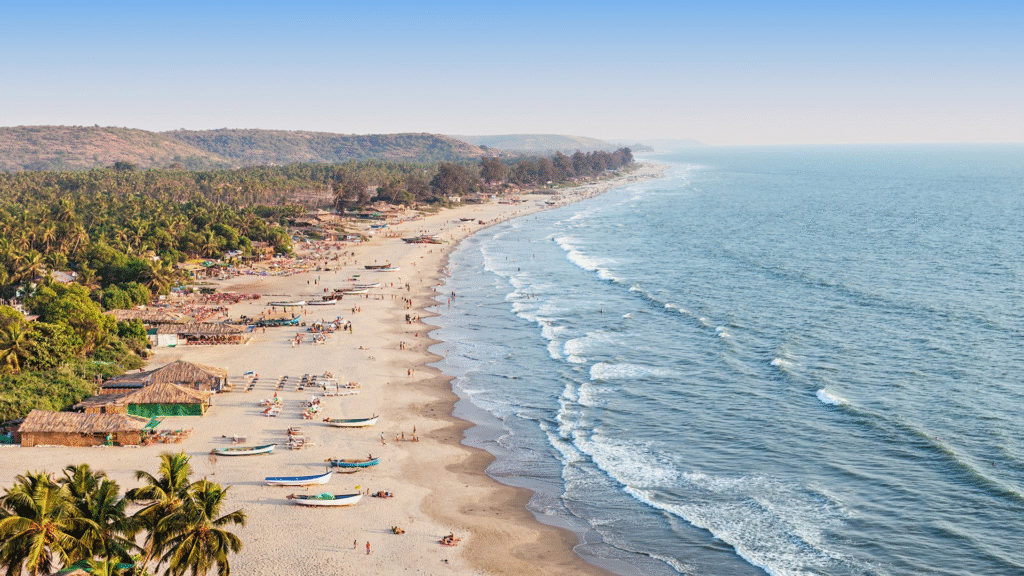
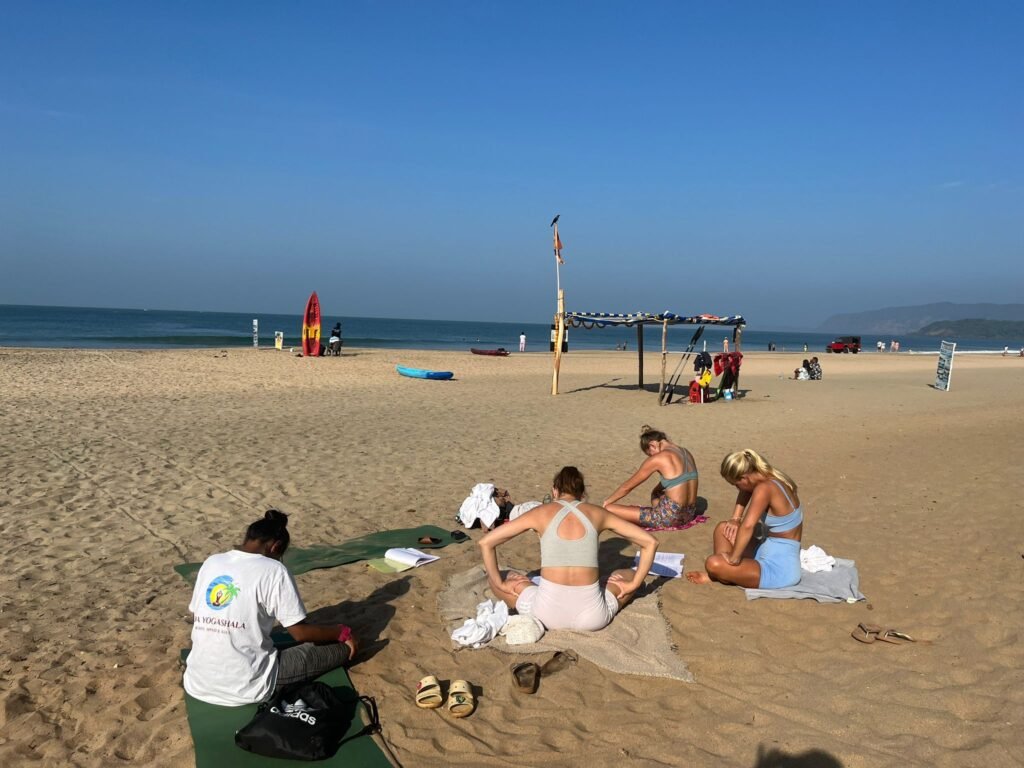
Most of Goa’s original hippie-era yoga scene took root in the north, around Anjuna and Arambol, and that area still carries a lot of that energy — flea markets, drum circles, a busier, more bohemian vibe. South Goa developed differently. Beaches like Agonda stayed quieter for longer, protected in part by geography and in part by slower development, and that quiet is exactly what drew serious yoga schools south over the last decade.
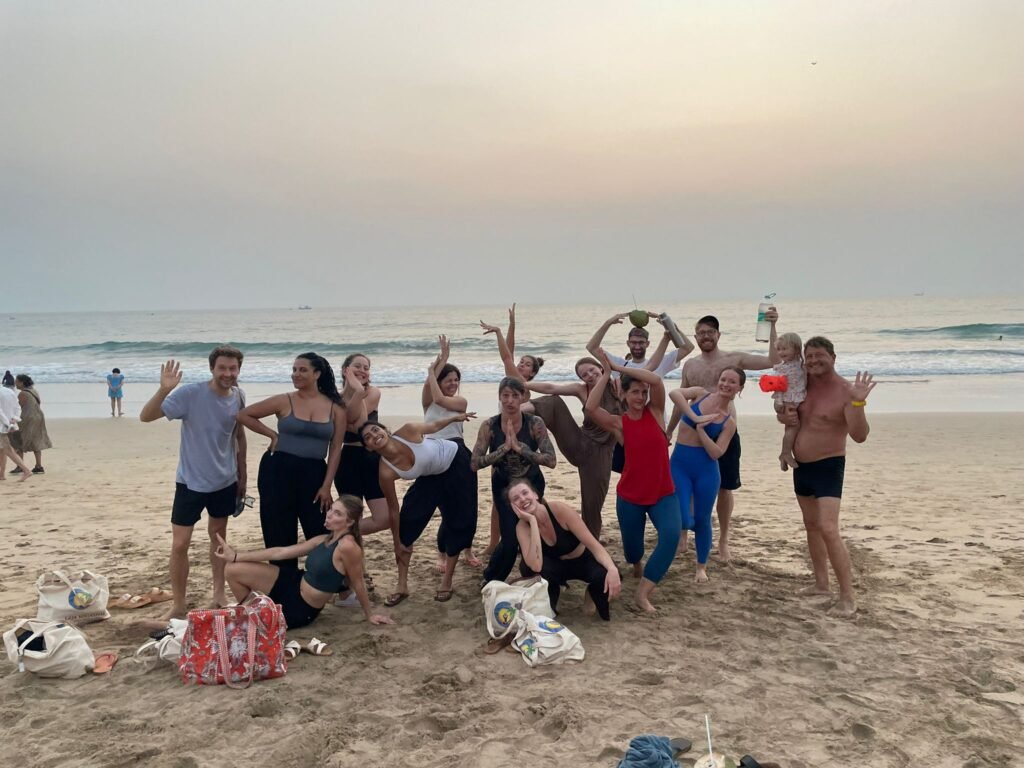
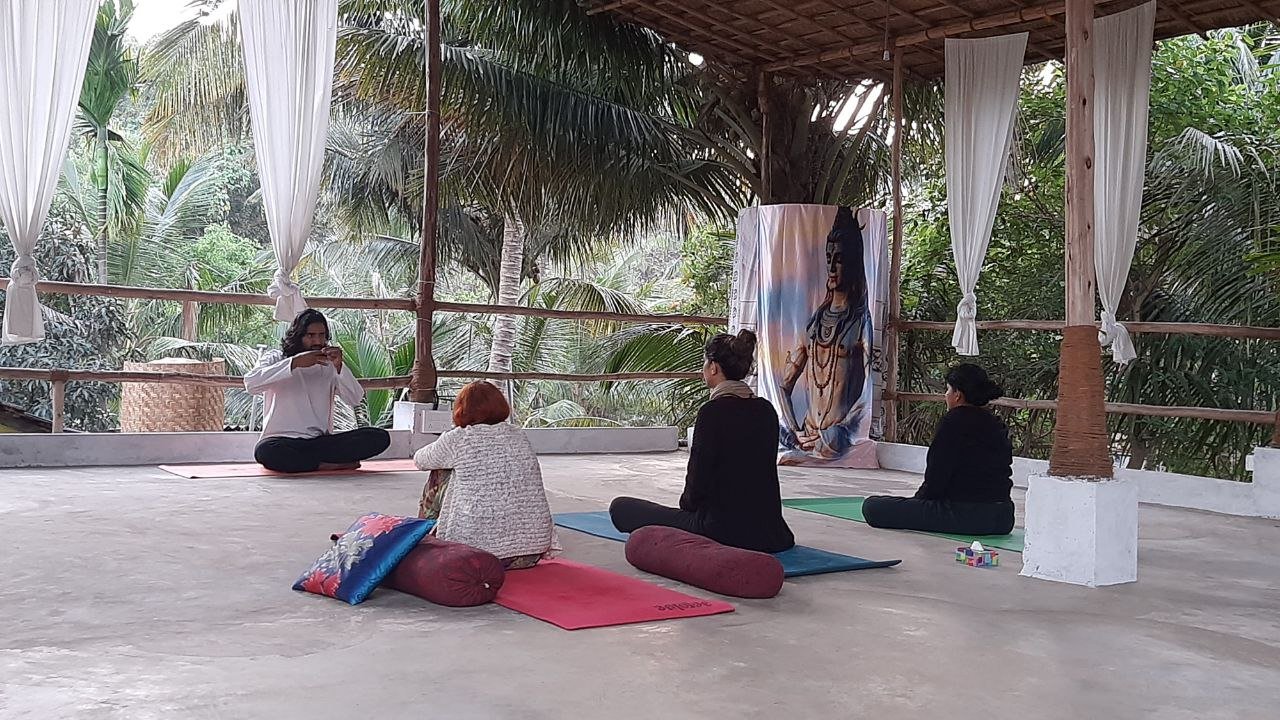
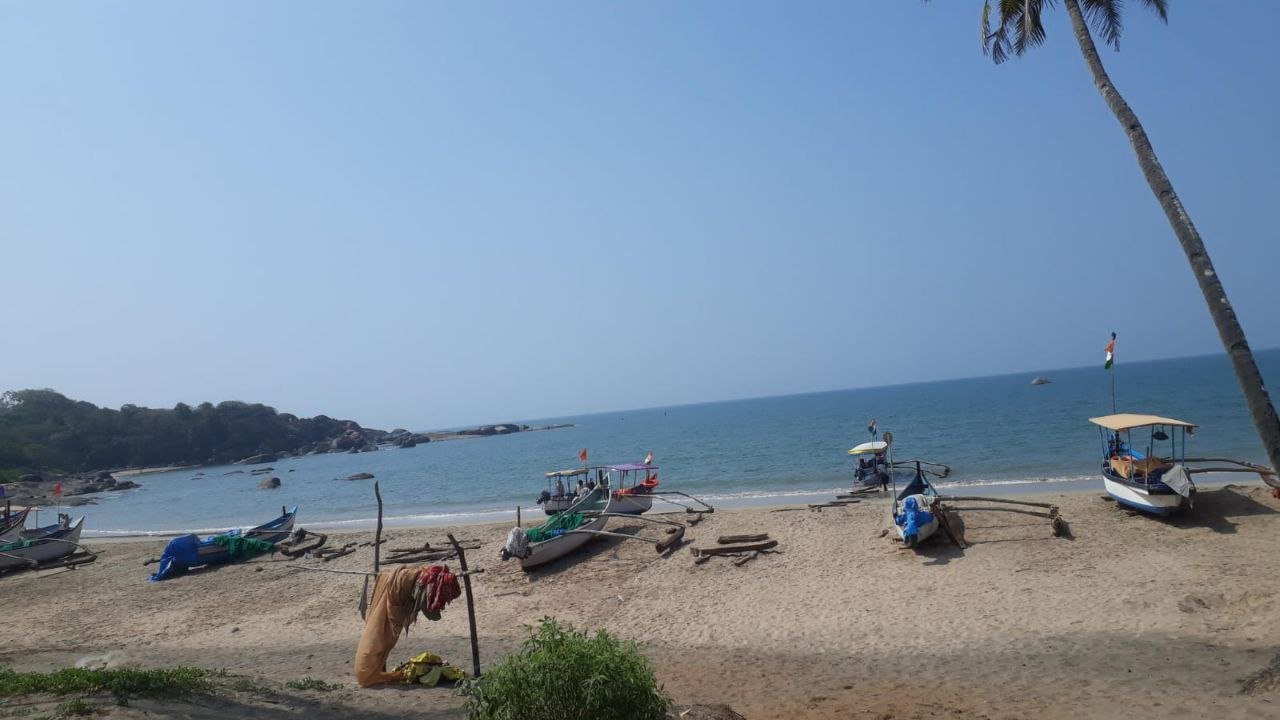
It’s why we built Goa Yogashala here rather than up north. A 200-hour or 300-hour teacher training asks a lot of your focus and energy — you’re doing multiple practices a day, studying philosophy and anatomy, learning to teach, often for the first time in your life. That kind of depth is much easier to access somewhere unhurried. Agonda gives our students the version of Goa the original travelers were actually looking for: warm sand, quiet mornings, and space to actually hear themselves think.
A Living Tradition, Not a Trend
It’s worth saying plainly: yoga in Goa isn’t a marketing gimmick layered on top of a beach holiday. The coastline’s connection to yoga and Ayurveda has real roots going back over half a century, shaped by generations of travelers who came looking for exactly what students still come looking for today — a break from the noise, and a chance to learn something old and genuinely useful. The setting has changed a lot since the 1970s, but the reason people keep coming hasn’t.
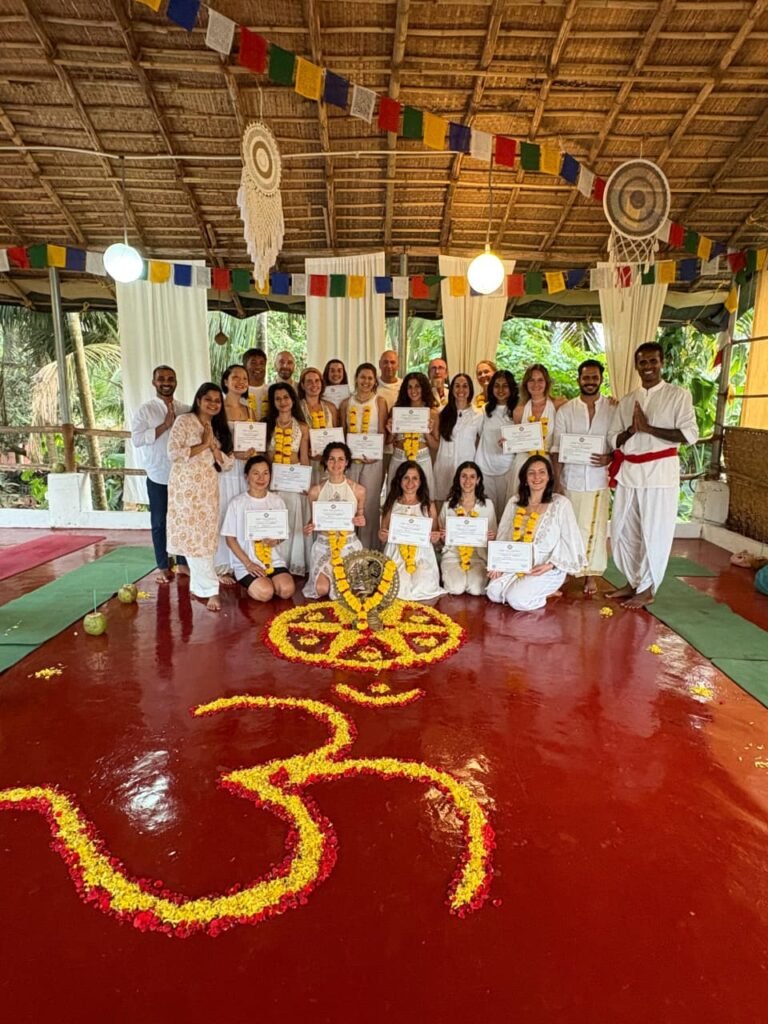
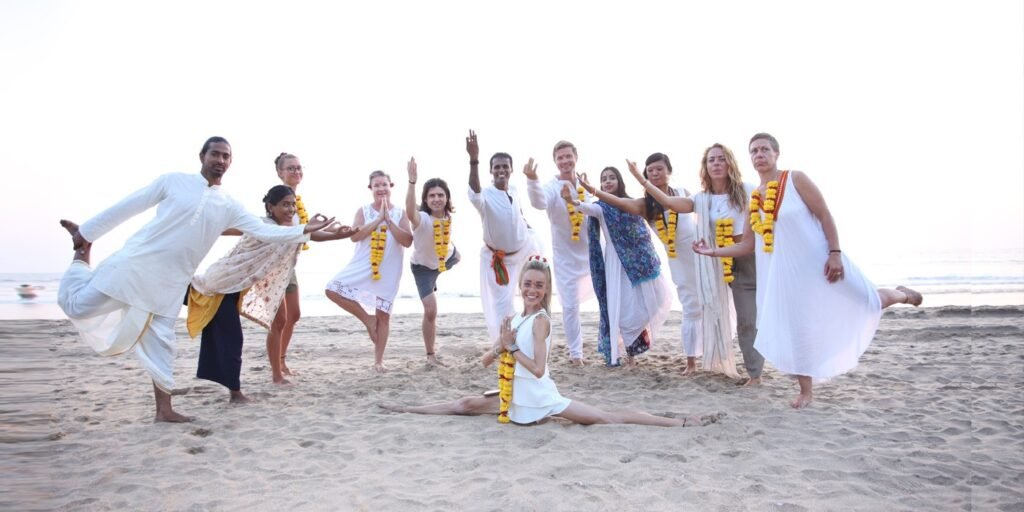
If you’re curious what that looks like in practice, our 100-hour, 200-hour, and 300-hour Yoga Teacher Training courses run year-round on Agonda Beach, with early bird pricing available for bookings made three months in advance.