You’ve probably read through all three of our course pages by now, done the math on the euros and the days, and still landed on the same question: which one do I actually book?
It’s a fair thing to get stuck on. On paper the difference between 100, 200 and 300 hours looks like a simple matter of duration and price. In practice, it’s a decision about what you want yoga to become in your life — a deeper personal practice, a professional teaching qualification, or the next stage of a teaching career you’ve already started. Here’s how to think about it.
100-Hour YTTC — for building a real foundation, fast
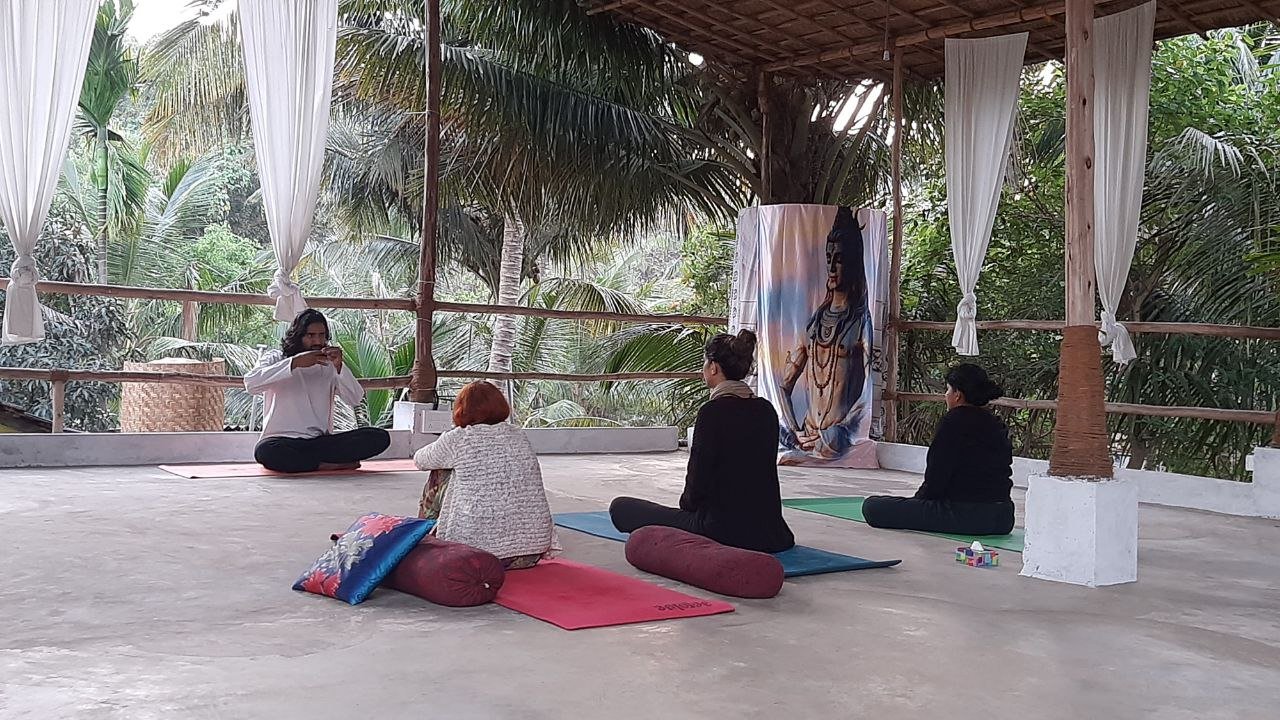
Who it’s for: Beginners and intermediate practitioners who can’t commit a full month away, but want more than a retreat — something structured, with a certificate at the end.
What you actually walk away with: A solid grounding in Hatha and Ashtanga fundamentals, an introduction to teaching methodology from day one, and enough Pranayama, meditation and philosophy to understand why the postures work, not just how to do them. It’s 12 days — short enough to fit around a job or a travel schedule, long enough to genuinely shift your practice.
What it’s not: A professional teaching credential on its own. Yoga Alliance’s internationally recognised teaching certification starts at 200 hours, so if your goal is to teach publicly or get insured as an instructor, treat the 100-hour as a stepping stone rather than a destination.
Choose this if: You’re yoga-curious but time-poor, you want to test whether teacher training is for you before committing a full month, or you’re a long-time practitioner who wants to deepen technical understanding without the full YTT commitment.
200-Hour YTTC — the one most people actually need
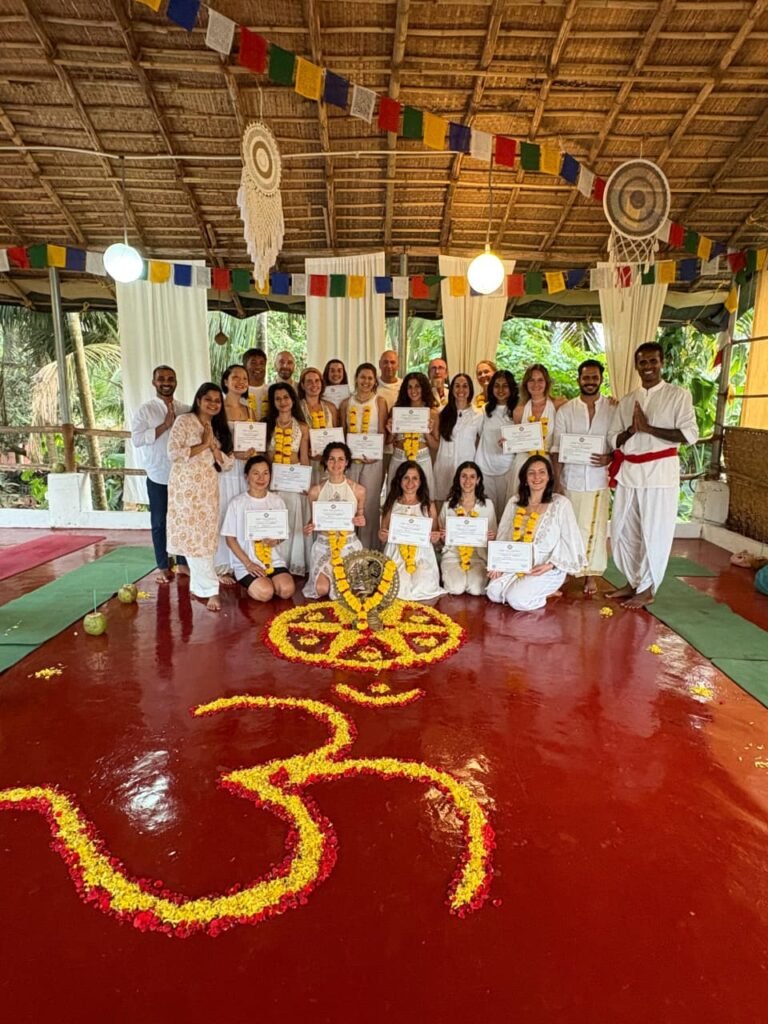
Who it’s for: Anyone who wants to teach. This is the internationally recognised entry point — the Yoga Alliance benchmark that gets you RYT-200 certified and qualified to lead classes almost anywhere in the world.
What you actually walk away with: Four weeks of Hatha, Ashtanga, Vinyasa and Yin, layered with Ayurveda, anatomy, alignment and adjustment, and teaching methodology practiced daily rather than crammed in at the end. By week three you’re not just doing the poses, you’re learning to cue, observe and correct them in other people — which is a completely different skill.
Why 26 days matters: It’s long enough for the material to actually settle. Multi-style training compressed into two weeks means you’re absorbing information; at four weeks you’re starting to embody it, which is what students can feel the difference between a teacher who learned a sequence and one who understands the practice.
Choose this if: You want to teach yoga — professionally, casually, or just for friends and family — or you want the single most complete, well-rounded YTT experience without going further into advanced study.
300-Hour YTTC — for teachers who are ready to go deeper
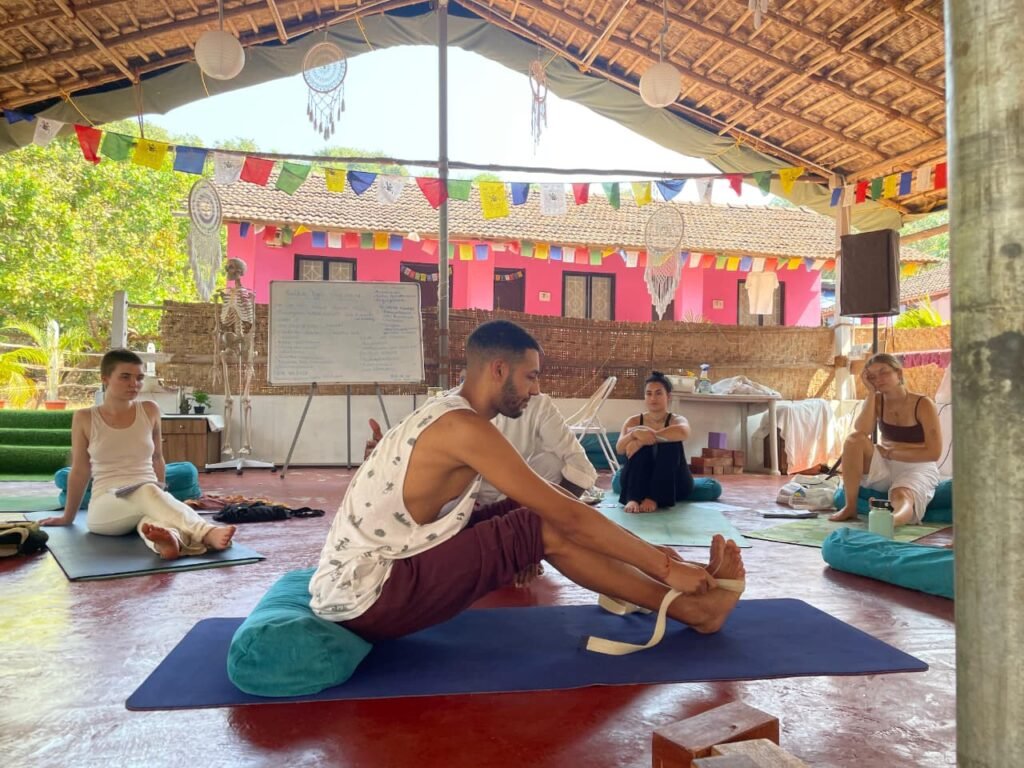
Who it’s for: Certified 200-hour graduates (from any Yoga Alliance school, not just ours) who are already teaching or about to start, and want to refine their craft rather than relearn the basics.
What you actually walk away with: Advanced asana work, deeper alignment and adjustment training, more nuanced Ayurveda study, and — combined with your 200-hour certificate — the credential to register as an RYT-500, the highest standard Yoga Alliance recognises. It’s the difference between knowing the primary series and understanding why it’s sequenced the way it is, well enough to explain that to a room of your own students.
What it assumes: You come in already comfortable with foundational teaching methodology. This isn’t a place to learn how to teach for the first time — it’s where you learn to teach with more depth, precision and confidence.
Choose this if: You’ve completed a 200-hour YTTC (with us or elsewhere) and you’re ready to move from “newly certified” to genuinely accomplished — whether that’s for your own teaching business, a studio role, or simply because your practice has outgrown the 200-hour toolkit.
Still not sure? A quick gut check
- “I just want to go deeper in my own practice, teaching isn’t the goal yet” → 100-hour
- “I want to be able to teach yoga, this is my main goal” → 200-hour
- “I’m already RYT-200 certified and want to level up” → 300-hour
- “I have a 200-hour certificate but it’s been years and I feel rusty” → Also 300-hour — the advanced material will re-sharpen fundamentals you already know, rather than repeat them from scratch
One more thing worth knowing: you don’t have to choose once and be locked in. Plenty of our students start with the 100-hour to test the waters, come back for the 200-hour once they know teaching is the goal, and return again later for the 300-hour once they’ve got real classroom hours behind them. There’s no penalty for taking it in stages — only for guessing wrong and signing up for more (or less) than you’re ready for.
If you’re still torn between two of these, message us directly. We’d rather talk you into the right course than watch you talk yourself into the wrong one.