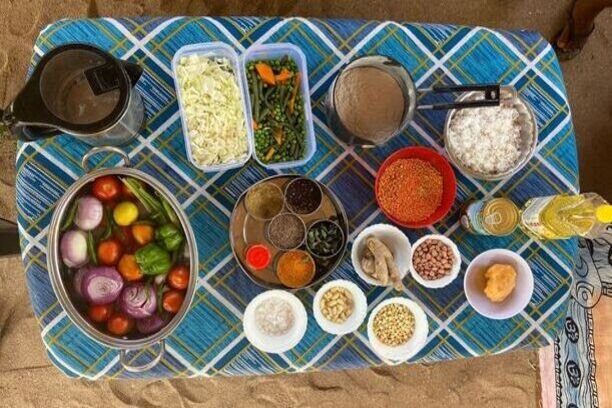
One of the questions we get most from students booking a yoga teacher training with us is simple: “What will I actually be eating?”
At our shala, vegetarian food is treated as part of the practice, not an afterthought. Every meal is vegetarian, mostly plant-based, and designed to keep you light, energized, and steady through two, sometimes three, classes a day. Nothing heavy, nothing that fights your digestion during a forward fold. Here’s a look at what typically lands on your plate throughout your yoga teacher training.
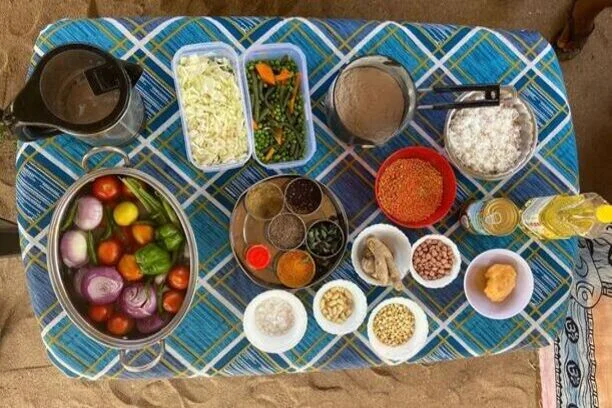
Breakfast: Light and Grounding
Mornings start early, often right after pranayama and asana, so breakfast needs to refuel without weighing you down.
- Poha – flattened rice tossed with turmeric, mustard seeds, curry leaves, and peanuts. Light, easy to digest, and a South Asian breakfast staple for good reason.
- Vegetable Chilla – a savory lentil or gram-flour pancake packed with grated carrot, spinach, and onion. High in protein, gluten-free, and satisfying without being dense.
- Upma – a semolina porridge cooked with mustard seeds, curry leaves, and vegetables. Comforting and warm, especially on cooler monsoon mornings.
- Oats – served simply, sometimes with banana and cinnamon, for students who want something familiar and gentle on the stomach before an early practice.
- Pancakes – our version leans wholesome: whole wheat or banana-based, lightly sweetened, and often topped with fresh fruit.
Lunch/Dinner: The Main Fuel of the Day
Lunch is the biggest meal of the day, timed to give your body real fuel after the morning session and before afternoon workshops or teaching practice.
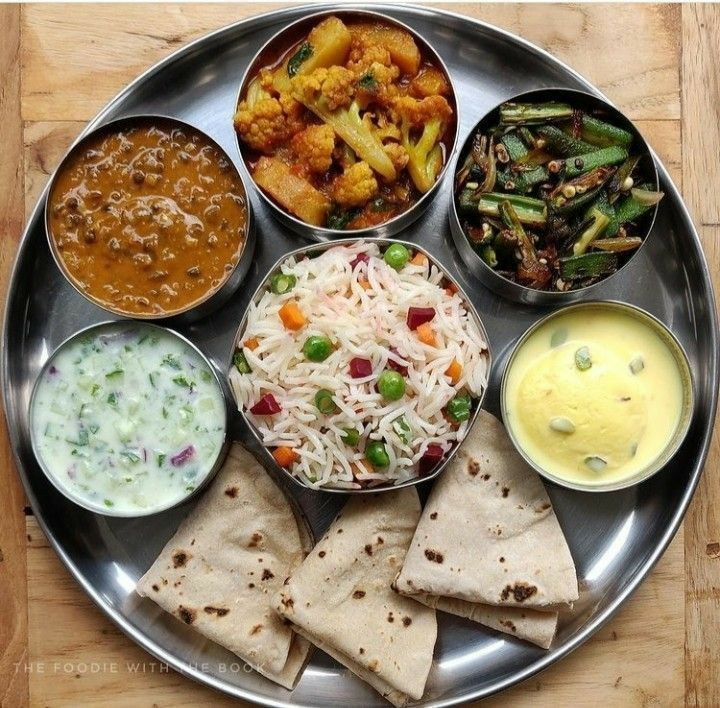
- Dal – yellow lentils simmered with turmeric, cumin, and garlic, always on rotation because it’s protein-rich and endlessly comforting.
- Rice – steamed and simple, the base that ties the rest of the plate together.
- Chapati – whole wheat flatbread, made fresh, for scooping up dal and vegetables.
- Seasonal Vegetables – lightly spiced sabzi rotating through whatever’s fresh that week: pumpkin, beans, cauliflower, okra.
- Salad – raw cucumber, tomato, carrot, and beet, often with a squeeze of lime, to keep digestion moving and add crunch to an otherwise soft-textured meal.
Snacks and Lighter Bites
Between sessions, we keep things simple and nourishing rather than sugary or heavy.
- Vegetable Balls – lightly pan-fried or steamed bites made from mixed vegetables and chickpea flour, a favorite for an afternoon protein boost.
- Hummus – served with fresh vegetable sticks or flatbread, a nod to the international crowd that passes through the shala.
- Fresh Fruits – papaya, banana, watermelon, and pineapple, depending on the season, often served as a mid-morning or evening snack.
Why Vegetarian Food Matters During Your Training
Goan and South Indian vegetarian food already leans toward what yogic nutrition asks for: fresh, seasonal, easy to digest, and free of anything that sits heavy before a twist or an inversion. During a yoga teacher training, your body is working hard, physically and mentally, so the vegetarian food we serve is built to support that: moderate spice, light oil, and portions sized so you leave the table satisfied, not sluggish.
If you have specific dietary needs — vegan, gluten-free, low-spice — just let us know when you book. Our kitchen is used to adjusting, and most of the menu above is naturally flexible.
Curious what a full day of meals and practice looks like on our yoga teacher training? Check out our program schedule or reach out with any questions before you book.