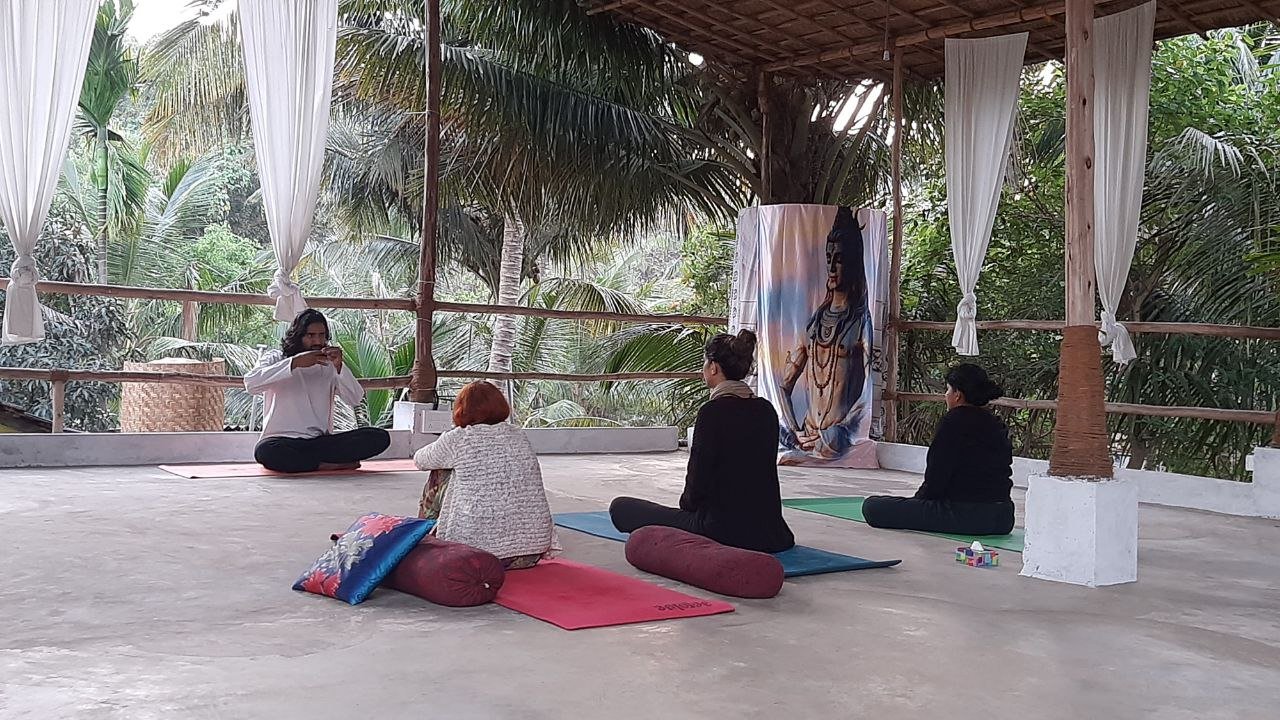
Starting a yoga teacher career after certification is rarely as obvious as it seems from the outside. You did it. The 200 hours are behind you. Your certificate is printed, your Yoga Alliance registration is filed, and somewhere between the fire ceremony and your last savasana at Goa Yogashala, something in you shifted. You’re a yoga teacher now.
And then you fly home. And the question hits: okay… now what?
This is the part nobody talks about at graduation. Not because it’s a secret, but because it’s genuinely different for everyone. So instead of vague inspiration, here’s the honest, practical version — what our graduates actually do in their first year, what tends to work, and what a real income picture looks like.
The First Mistake Almost Everyone Makes
Most new teachers wait until they feel “ready” to start teaching. They tell themselves they’ll teach once they’ve done a few more trainings, read a few more books, gotten more confident with adjustments.
Here’s the uncomfortable truth: you will never feel fully ready. Teaching is what makes you ready. The gap between “certified” and “confident” only closes by standing in front of students — not by waiting.
The teachers who build real momentum in year one are the ones who start small and start fast, usually within the first 4–6 weeks of getting home.
Step 1: Teach Before You Try to Get Hired
Before you approach a studio, teach someone. A friend. A neighbor. A donation-based class in a park. This does three things:
- It gets the shakiness out of your voice and your sequencing
- It gives you real material for your bio and social media (“currently teaching weekly classes in…”)
- It tells you honestly whether you enjoy teaching groups, or whether 1:1 work suits you better
Studios and gyms are far more likely to hire someone who’s already teaching, even informally, than someone whose only experience is the training itself.
Step 2: Pick Your Lane (You Don’t Have to Do Everything)
New teachers often assume they need to be ready to teach vinyasa, yin, prenatal, kids’ yoga, and lead retreats — all at once. You don’t. In fact, trying to be everything to everyone usually means you’re memorable to no one.
Look back at what you gravitated toward during your training. Common early paths for our graduates:
- Studio classes — steady, structured, good for building consistency and a local following
- Corporate wellness — companies increasingly bring in yoga teachers for employee wellbeing sessions; often pays well per session
- Private 1:1 clients — higher pay per hour, but takes longer to build a client base
- Online classes — lower barrier to start, global reach, but a genuinely crowded market
- Retreats and workshops — usually a year-two or year-three move once you have a following
Pick one or two to focus on for your first six months rather than spreading yourself across all of them.
Step 3: Build the Unglamorous Foundation
The teaching is the fun part. The foundation is what makes the teaching sustainable:
- Liability insurance — non-negotiable in most countries if you’re teaching publicly
- A simple website or even just an Instagram bio that says clearly what you teach, where, and how to book
- A short bio that’s honest about your training (200hr, Yoga Alliance certified, trained in Goa) without overselling experience you don’t have yet
- A class plan library — build a bank of 8–10 sequences you’re genuinely confident teaching, so you’re never improvising from scratch
So… Can You Actually Make a Living Teaching Yoga?
Yes — but rarely from one single class rate, and rarely in year one. Here’s the honest breakdown of how working yoga teachers typically build income:
Per-class teaching (studio/gym) Usually the lowest per-hour rate, but the most reliable route to consistent weekly income and visibility. This is where most teachers start.
Private sessions Significantly higher hourly rate than group classes, but requires trust and a referral network — which takes time to build. This is usually where income really grows in year two onward.
Corporate and event work Companies, hotels, and wellness events often pay a flat session fee that’s considerably higher than a studio class. Harder to find without a network, but worth pursuing once you have some experience.
Online teaching Low overhead, but income is usually modest unless you build a genuine following — treat it as a long game, not a quick income source.
Retreats and trainings The highest earning potential of all these paths, but realistically a year 2–3+ move once you have teaching experience, a following, and — often — further training like a 300hr certification.
The teachers who make a full-time living almost always combine two or three of these income streams rather than relying on one. And nearly all of them describe the first year as “building,” not “earning” — the income tends to compound as your reputation and network grow, not arrive all at once.
The Thing That Actually Determines Your Success
It’s not talent, and it’s not even your sequencing skill. It’s whether you keep showing up when the first few classes have three students instead of thirty, when a corporate client cancels, when your Instagram post gets twelve likes.
Every teacher on our own team — including our founder, Praveen, who started out as a gym trainer — built their path one small class, one word-of-mouth referral, one imperfect first year at a time.
If You’re Ready for the Next Step
Many of our graduates find that a 300 Hour Teacher Training — taken once they have some real teaching experience under their belt — is what genuinely deepens both their confidence and their earning potential. It’s also the credential that opens doors to leading retreats and workshops later on.
Whatever stage you’re at, the honest advice is the same as what we tell every graduate on their last day with us: don’t wait to feel ready. Start small, start now, and let the teaching itself build your confidence.
Trained with us and starting your teaching journey? We’d genuinely love to hear where you land — tag us @goayogashala or reply to this post. Considering your 300hr? Explore our 300 Hour YTTC.